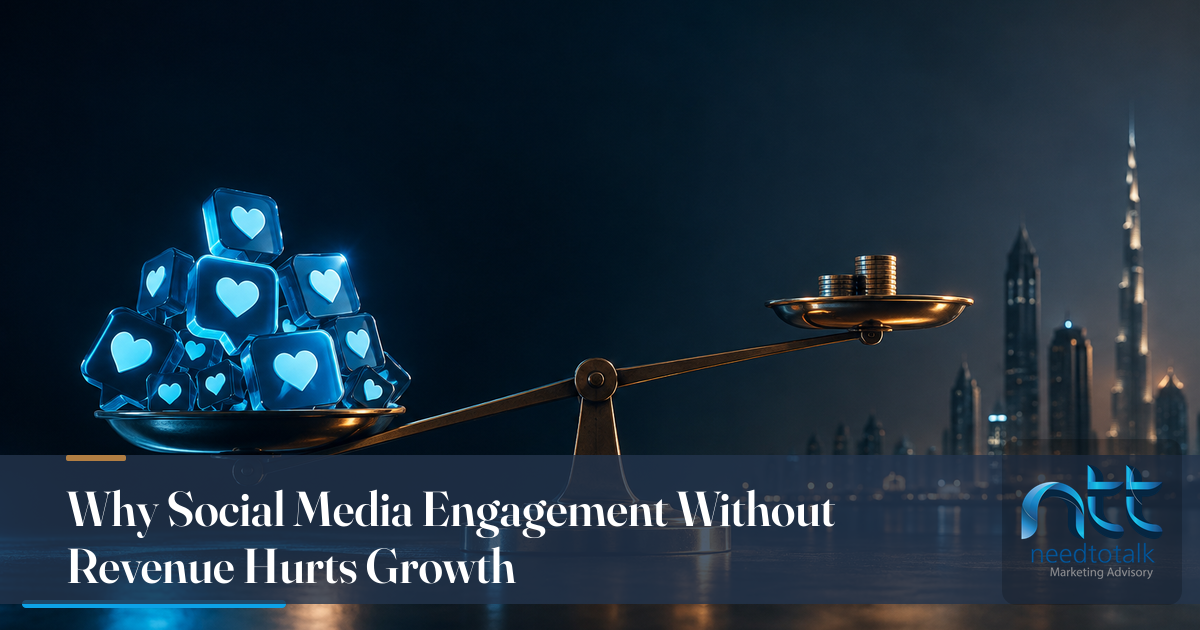
Senior leaders in Dubai, the UAE and the GCC are seeing a familiar pattern: social media engagement rises, but sales figures do not. Teams share positive reports about likes, shares and comments, yet the commercial impact is unclear or missing. This disconnect between social media engagement without revenue is not a minor concern—it’s a signal that digital activity may be outpacing business value.
The core problem is not a lack of effort or creativity. Most organisations have invested in content, campaigns and community management. The real issue is that engagement metrics can climb even as pipeline quality, lead generation and revenue contribution stall or decline. This article explains why engagement alone is a misleading success measure, and what senior decision-makers can do to realign social media with growth.
Why Engagement Is Easy to Grow, Even as Revenue Falls
Social platforms are designed to reward content that sparks reactions—whether or not those reactions come from your target market or buying audience. A post can go viral for its humour, controversy or visual appeal, attracting attention from people with no intent to buy. In the GCC, where audiences are diverse and digital habits are evolving, it is common to see high engagement from followers outside your commercial focus.
For example, a Dubai-based B2B tech firm may post a trending meme that receives hundreds of shares, but none of those interactions come from procurement managers or business owners. The marketing team celebrates the spike in engagement, but the sales team sees no change in qualified leads. This is not a failure of creativity—it is a sign that engagement is not a proxy for revenue.
When engagement becomes the main success measure, teams can chase easy wins that do not move the business forward. This can mask underlying issues, such as weak positioning, unclear value propositions or a lack of commercial accountability. Senior leaders must judge social media by its contribution to business outcomes, not just its reach.
The Real Cost of Chasing Vanity Metrics
Focusing on engagement for its own sake diverts resources from activities that drive revenue. Marketing budgets are finite, and every hour spent crafting viral content is an hour not spent refining offers, nurturing leads or optimising conversion paths. In the GCC, where competition is intense and budgets are scrutinised, this misallocation can slow growth.
Consider an illustrative example: a UAE-based professional services firm invests heavily in social video content that garners thousands of views, but the videos do not address the decision criteria of their target buyers. The result is impressive engagement numbers, but no measurable uplift in inbound enquiries or sales meetings. The leadership team is left wondering why the marketing spend is not translating into commercial results.
The cost is not just financial. Chasing vanity metrics can erode trust between marketing and commercial teams, leading to misaligned objectives and missed opportunities. The real value of social media lies in its ability to support the sales pipeline, reinforce positioning and deliver measurable business outcomes.
Judging Social by Contribution, Not Reach
To move beyond social media engagement without revenue, leaders must shift from reach-based metrics to business contribution. The central question is not “How many people saw or liked this?” but “Did this activity help us win new business, retain clients or strengthen our brand in the market?”
This requires a clear understanding of the commercial objectives for social media. For B2B firms in the GCC, these might include generating qualified leads, supporting account-based marketing, or building authority with a specific buyer segment. Social content should be planned and measured against these outcomes, not just engagement rates.
A practical approach is to implement a system that ties social activity to pipeline metrics. For example, using analytics and CRM integration to track which posts drive website visits, form submissions or meeting requests from target accounts. This level of accountability is essential for sustainable growth and can be supported by platforms such as Growth OS, which brings strategy, execution and measurement into a single system.
Recognising the Signs of Misaligned Social Media
Senior decision-makers can spot when social media is not contributing to revenue by looking for specific warning signs. These indicators are often visible in regular reporting and commercial reviews:
- High engagement rates but flat or declining qualified leads from social channels
- Content themes that attract broad attention but do not address buyer pain points
- Disconnected reporting between marketing and sales teams
- Lack of clarity on which social activities are driving commercial outcomes
When these signs appear, it is time to revisit the social media strategy and reconnect it to business goals. This may involve a marketing audit or diagnostic to identify gaps in positioning, messaging or measurement. Need To Talk’s marketing strategy development service can help leadership teams realign social activity with commercial objectives.
How to Realign Social Media With Revenue Goals
Realigning social media with revenue starts with leadership setting clear commercial objectives and holding teams accountable for business outcomes. This is not about abandoning engagement metrics entirely, but about putting them in context.
A senior approach involves:
- Defining the specific business outcomes social media should support (e.g., lead generation, client retention, authority-building)
- Mapping content and campaigns to the buyer journey and decision criteria
- Integrating analytics and CRM to track the full path from social interaction to revenue
- Regularly reviewing social activity in commercial terms, not just engagement rates
This approach ensures that resources are focused on activities that contribute to growth, rather than on chasing numbers that do not matter. It also builds trust between marketing and commercial teams, as everyone is measured against shared business goals.
Frequently asked questions
Why does social media engagement often fail to drive revenue?
Engagement metrics such as likes and shares are easy to grow, but they do not always come from your target buyers. Without a strategy that links social activity to the sales pipeline, high engagement can mask a lack of commercial impact.
What should we measure instead of engagement?
Focus on metrics that reflect commercial contribution: qualified leads generated, meetings booked, pipeline influenced and revenue attributed to social campaigns. These measures show whether social media is supporting business growth.
How can we connect social media to our sales process?
Integrate social analytics with your CRM and lead tracking systems. This allows you to see which posts and campaigns generate real business interest, and to adjust your strategy based on what drives revenue.
When should we consider a marketing audit for social media?
If you see high engagement but little or no impact on leads or sales, or if marketing and sales teams are not aligned on goals, a marketing audit can identify gaps and recommend corrective action.
Next steps
If your organisation is experiencing social media engagement without revenue, it is time to move beyond vanity metrics. Senior leaders must judge social by its contribution to growth, not just its reach. Start by reviewing your commercial objectives for social media, integrating measurement with your CRM, and holding teams accountable for pipeline outcomes. For a structured approach to diagnosing and realigning your marketing, book a strategy session with Need To Talk and ensure your social media delivers measurable business results.